Willow Labs AI
Parentification: Why You Can't Relax as an Adult
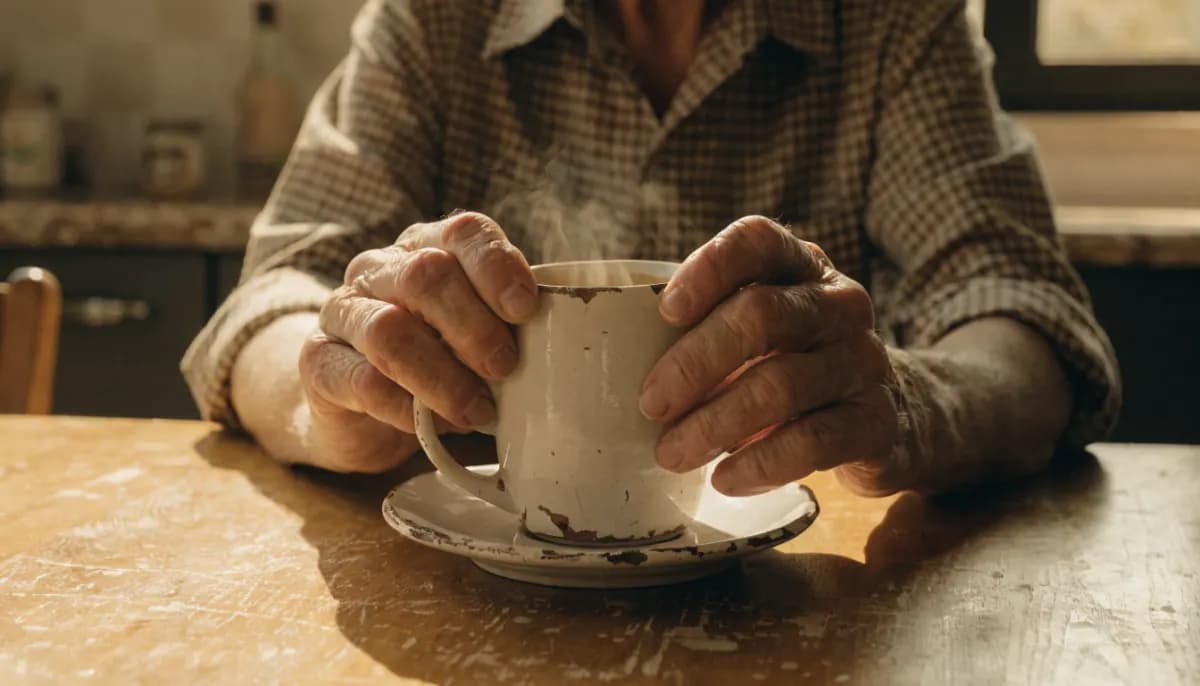
If you raised your parent, rest feels like a trap. Your body equates stillness with being on-call. Here's how to retrain the parts that won't clock out.
You finally sit on the couch on a Sunday. Three minutes in, your leg starts bouncing. You check your phone, open the fridge for no reason, notice a streak on the coffee table you suddenly have to wipe. Your whole body treats leisure like a smoke alarm.
This isn’t a productivity problem. It’s a job problem. You got hired too young as the responsible one, the smoother of chaos, the person who knew where the important papers were and how to keep the peace. Your system learned that safety lives in being useful. So when you try to rest, every part of you rushes back to work.
you got the job too early
Maybe you were eight, listening for the sound of keys in the lock and knowing from the way they hit the bowl what kind of night it would be. Maybe you were twelve, making dinner while answering your mom’s questions about bills you didn’t understand. You tracked moods, edited your own needs, and performed stability so the house didn’t tip.
You didn’t call it anything. You just knew that if you paid attention hard enough, you could head off the explosion, the sulk, the spiral. You became the thermostat in a home of weather systems. Adults thanked you in ways that felt like love: “I don’t know what I’d do without you.”
There was a cost. Kids who shoulder adult roles don’t stop being kids. The feelings that had nowhere to go went underground. You built a high-functioning surface, and beneath it, a nervous system that never got to fully power down. Rest felt like taking your hand off the wheel.
As an adult, you still over-prepare, answer messages the minute they land, read rooms like they’re your job. You plan vacations with spreadsheets and come home needing a vacation. On paper, you’re competent. Inside, you’re on call.
rest equals risk
When you grew up being needed, relaxing wasn’t neutral. It was risky. If you relaxed, you could miss the early warning sign. If you missed the sign, someone got hurt, or disappointed, or loud. So your body linked stillness with danger.
That pairing is sticky. On the couch, stillness cues “be ready.” Your brain spins up a checklist. Your shoulders lift. You scan for tasks you can complete to drop the tension. It works, for a minute. The sink empties, the inbox clears, your jaw eases. Then the tension returns, asking for the next offering.
There’s also guilt. Not the airy, moral kind. A heavy-bell guilt that rings when you do nothing while someone, somewhere, could use help. When your usefulness became your identity, being “useless” feels like disappearing.
And there’s grief. Rest gives your system the first quiet it’s had in years, and quiet lets buried feelings surface. Nostalgia with teeth. Anger with nowhere to go. That swell of sadness you mistake for laziness. Your body doesn’t hate rest. It remembers what shows up when you stop.
Rest isn’t the opposite of work. It’s the opposite of being needed.
So when you try to relax, parts of you sprint to resurrect need. They invent tasks, find problems, pick fights with dust. If something is wrong, you have a reason to switch on again. Crisis is familiar. Calm is not.
meet the parts that won’t clock out
You don’t have one unified self who “can’t relax.” You have a crew that took on specialized roles to keep you safe, and they’re still running the old playbook. Meet a few of them.
There’s the scanner. Eyes on the door, ears tuned for tone, always five seconds ahead. It lives in your neck and eyes. It whispers, check your phone, just in case. It’s not trying to stress you out. It’s standing between you and surprise.
There’s the diplomat. The fixer. It smooths every thread. It drafts careful texts, says yes to the group chat plan you hate, manages other people’s schedules in your head. It believes peace only lasts if you maintain it.
There’s the driver with the whip. It hears the word “rest” and shoves you toward a to-do list. It calls you lazy at 10 pm when you finally sit down. It measures worth in output because that’s how you survived attention.
And there’s the kid who learned that adults break and kids patch. When things are quiet, this one panics. Quiet used to mean “we’re between storms.” Panic calls in the firefighter: scroll, snack, pour, shop, anything to smother the feeling fast.
These parts aren’t your enemy. They’re loyal. They sign the night shifts without complaining. If you push them away, they push back harder. If you hear them out, they ease. Start with five minutes where you don’t try to silence them; you get curious about what they’re protecting.
Here’s a simple check-in to do when you try to rest and your system revs:
1) Name the job. Say, out loud if you can: “A part of me is scanning. Its job is to keep me ahead of pain.” Then notice where it lives in your body.
2) Thank it. Not performative. A simple, “You kept me safe for years. I get why you’re on.” Watch what happens to your breath.
3) Orient to now. Turn your head slowly and take in the room. Window, lamp, plant, mug. Tell your system what year it is and who’s here. Quiet right now is not the old quiet.
4) Set a tiny shift. “For the next ten minutes, I’m off duty. If an actual emergency happens, we’ll handle it.” Use a timer so your drivers trust there’s an end.
5) Promise a check. “We’ll look for tasks at 4 pm.” Schedulers ease when they know when the wheel comes back to their hands.
This isn’t woo. It’s how you retrain parts that learned no one else would take care of things. You don’t pry their fingers off the controls. You show them the brakes work.
training your system off duty
If you grew up on call, you need more than intention. You need rituals that your nervous system believes.
Start with visible off-duty signals. Close the laptop and put it in another room. Flip your phone screen-down in a bowl by the door and set Do Not Disturb for a real block, not five minutes. Swap the overhead light for a lamp. Your animal body reads these cues and shifts state faster than any affirmation.
Make off-duty windows. Not “I should relax more.” Real times. Tuesday 8:30–9 pm. Saturday morning, first coffee. Put them on a calendar the way you honor other people’s needs. Your parts respect a scheduled task more than a vibe.
Create friction where you over-function. If you answer every text in 30 seconds, change your message preview to show only names. If you do everyone’s dishes by reflex, buy a small drying rack that physically can’t hold more than a few plates. Constraint beats willpower when your system is wired to jump.
Give yourself a mess on purpose. Leave the clean laundry in the basket for 24 hours. Notice what lights up inside you. That pressure to fix isn’t proof the laundry must be folded. It’s proof your old job description is trying to reassert itself. Sit with the hum without “earning” your rest first.
If family still treats you as the household manager from 500 miles away, write a standard line you can use without debate. “I’m not available for that today. Here are three options.” Then stop. Do not keep the baton by CC-ing yourself into the solution. Your nervous system needs to see that the world keeps turning when you’re not spinning it.
Choose one useless pleasure and protect it from improvement. A jigsaw puzzle that makes nothing. Drawing badly for ten minutes. Sitting on the floor with the dog while the dryer hums. Do not turn it into a side hustle or a way to be a better person. Play is a protest against usefulness as worth.
Let someone else disappoint another adult. That urge to jump in at work, to soften your boss’s email, to make the group project painless for the person who didn’t read the brief—that’s your diplomat clocking overtime. Sit on your hands. Let the consequence land where it belongs. Your body will shake the first few times. That shaking is discharge, not danger.
If silence floods you with feelings, prepare for that flood kindly. Light a candle that smells like nothing from your childhood. Sit with both feet on the rug. When sadness rises, don’t fix. Say, “There you are.” Tears are your system unclenching, not a sign you failed at rest.
You’re not failing at relaxing. You’re succeeding at staying safe the old way. Teach your parts a new way with proof, not pep talks. Proof looks like ten minutes of nothing where nothing bad happens. It looks like an unread message that stays unread and the sky stays up.
Tonight, leave one plate in the sink. Put your phone in a drawer for twenty minutes. Sit on the floor and feel the weight of your thighs on the carpet, the mild ache in your shoulders as they drop. When the urge to move spikes, say quietly, “No one is drowning. We’re off duty.”
These articles are for self-understanding, not crisis. If you’re in active distress — Get help now →